Leaderboard


Popular Content
Showing content with the highest reputation since 10/18/26 in all areas
-
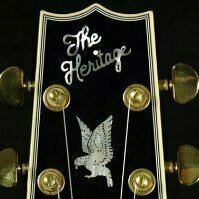
Hola folks! I used to frequent these forums about 15 years ago but was unable to get back with my old account (Jazzpunk) so had to do a reboot. In the past I was the proud owner of a 575 and a 530 but those are long gone now. Life took me on a different path for a while but happy to say, I have found my way back to the guitar and I am excited to be playing again. Now for the "just woke up from a coma, Soap Opera trope" of it all...wow have there been some changes! I've got the itch for another 530 and it really felt like I was stepping out of a time machine from a long ago past into the present when I started researching Heritage guitars again. I'll have to read up more on the changing of the guard but I have to say that my initial impressions are very good. The updated website and youtube content is really fantastic. It's so nice to see Heritage being showcased in the proper light I think it has always deserved. The players they gathered are fantastic and all of the demos look and sound top notch. Kudos to the new (to me) team for making that happen! Speaking of "top notch", once I got over the sticker shock, I was quite impressed with the differing tiers Heritage now offers. The custom stuff may be a bit out of my price range but it sure looks and sounds great. I imagine there was quite the controversy here when they updated the headstock design on some of the models but personally, I think they look great. The addition of the headstock inlays adds a nice touch of bling. Anyway, it's nice to be back and to see some familiar faces still posting here. Hopefully I will have another 530 in the not too distant future and be part of the Heritage crew once again. Cheers. 🙂3 points
-
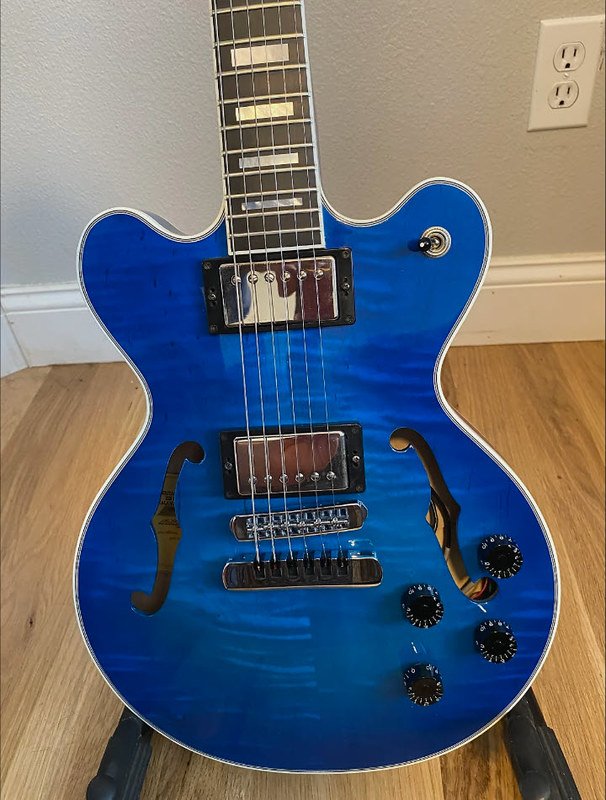
Here is a Millie DC. It has a lot of maple- the back, top and neck. Upper register access is easy. It balances well enough. A consideration with a blue guitar is that it will very slowly have some yellowing emerge. The original owner swapped out the HRWs with a set of PRS pups, which sound very good. I have the HRWs sitting in the case pocket, but so far have not had the urge to install them. From an aesthetics point of view, a well done burst is grand. Black is elegant. I like block inlays. I got a Les Paul Supreme earlier this year from a friend. There are similarities to the Millie series. The Supreme has solid woods with a lot of body hollowing, so both the Millie series and the Supreme are fairly light. The Supreme is less "neck heavy", but in neither is that a real concern. The Supreme has no back cavity cover. PIckup and harness work is doable but challenging. The better return on your dollar investment is the Millie if you plan to keep it. I'll add a little controversy. Of course every element in the signal chain and instrument affects the tone. I play the blue DC through four amps. Each takes the same instrument but sounds different. The Supreme is most like the chambered but has no back plate. I wish I had kept my Millie Eagle 2000. I had a lot of time with that guitar. I don't even remember why I traded it now. Oh well.
 3 points
 -
I'm fortunate. Back in the early 80's when I was studying guitar at the local community college, Joe Pass played 2 shows in one night. Prior to that, he hosted a student seminar. I met him. I sat in on the seminar, and watched 2 solo shows that night. It's a night that I won't ever forget. Joe was such a nice guy who went through a lot in his life. He was incredibly blunt, honest, and inspirational.3 points
-
I think Kent had a deal with parents. Buy your kid a Kent guitar and they'll never want to play guitar again, you can thank us later.3 points
-
Post pick of them or tell me about the ones you have. I've been looking on Reverb etc and there aren't a lot out there. Im kinda curious. Cheers2 points
-
Yes, the Prospect is a semi. It's a bit like a smaller version of the 535, much narrower at the waist. It came out in 1991, along with the Academy which is a single cutaway.
2 points
-
Welcome back JP. A year ago, I snagged a 530 after checking one out at the factory during PSP. Mine is the original Standard, with the Lollar P90s, not the newer Std II with the new Heritage pickups but it's still every bit a great guitar! It's since edged out my 535 for "most playing time". I can play without an amp, and plug in when I need to. Yeah, prices bumped up, but the standard lines are still good values for a quality US build. Plus they come Plek'd so we hear very few comments about poorly cut nuts or fret issues. The factory is stressing consistently high quality control.2 points
-
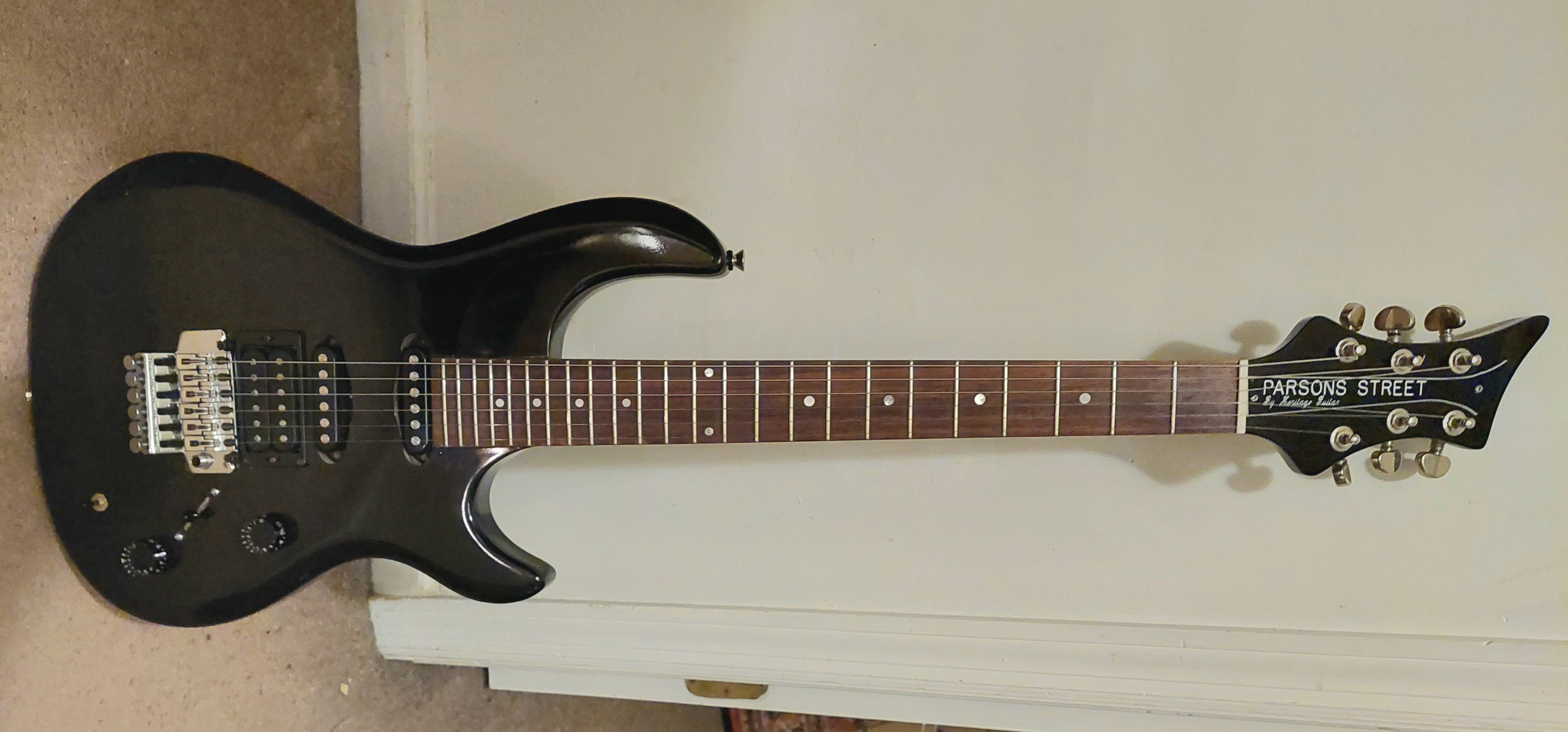
This Heritage Parsons Street is a great player, A different feel other Heritage. You're unlikely to see another one and may have different headstock ,tail piece, etc. It's the Darth Vader of Heritages . 6.36 LBS.
2 points
-
Welcome back JP!2 points
-
There were several Millies. The Millie Eagle 2000 had a carved back and top with a center block, as I recall. It was a single cutaway with abalone fretboard inlays. That was my favorite. There were several other Millie models.
2 points
-
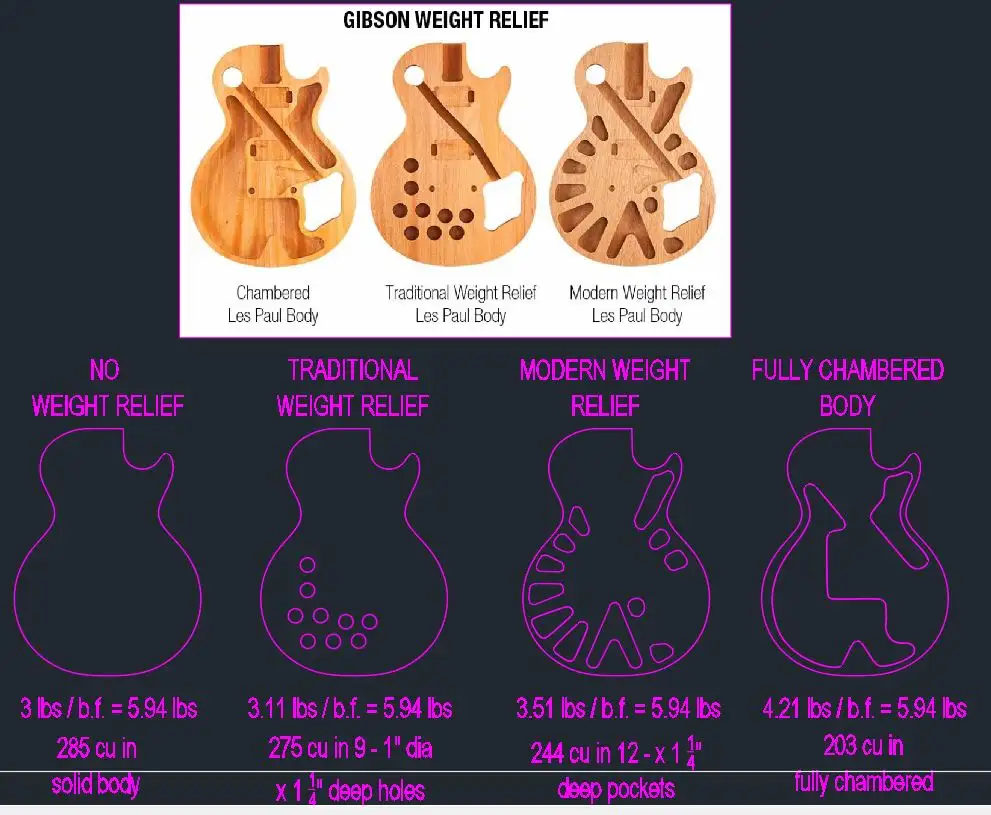
As I remember, there was a core of mahogany or maple which formed the chambered body, with carved maple top and back. It wasn't just a center block. It was wider and forms the rim but much thicker than you get with semi like the 535. It would be more like the chambered LP above. There was the 158, 155 and DC versions, plus the LE series. 155s have an access panel to the pots. The 158 doens't. The 155 is the most common.2 points
-
Look up some Joe Pass videos on YouTube. Listen to his chord voicings and watch his fingers. And be amazed. The man was a genius.2 points
-
that was great playing it reminded me of a steely dan song2 points
-
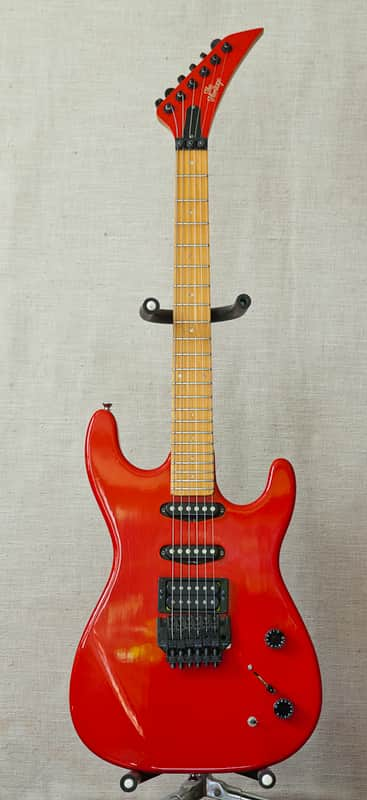
I have both the H-160 Stat and this one which is an H-162. I gigged with the 162 for about 8 years after I got it. Back when nobody knew what Heritage guitars were worth I could find them dirt cheap. I think I got the 162 for $400. The Stat was a bit more, like $700 and had been sitting in a music store for years. Both had Schallers and if you have read my posts, I have always found Schallers to be lifeless. I put some kind of Dimarzio's in each of them and they became great guitars. The Whammy bars on both stay in tune. THe 162 is really light and the Stat has a rather fat neck and is pretty heavy. The Stat has a weird kind of switching system that took a while to get used to it. The 162 has a coil tap. This post has inspired me to take them off the wall again..... I posted this video of me playing my stat a few years back. I got hired to do the guitars on this session and then he wanted me in the video. In looking at it I have no idea what that neck pick up was as I have a different one in there now. The solo starts at around 2:30..... https://www.youtube.com/watch?v=S3pvhTUgXEo&loop=0
2 points
-
Facebook shows a few Heritage Stat models with comments from owners and lookers... https://www.facebook.com/groups/56102934732/posts/10161563743204733/ https://www.facebook.com/groups/1512934312328828/posts/3759989507623286/2 points
-
I was thinking of the Academy. I own a Prospect 12 which must be very rare as I have never seen another anywhere. It is a truly great 12 string. There are someother unkown Heritage guitars out there also. I do own the Leon Rhodes model which is very much a tele style guitar. I am always looking for one of the Aaron Cowle Heritage mandolins and would love to try out one of their flat tops.1 point
-
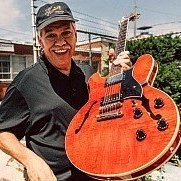
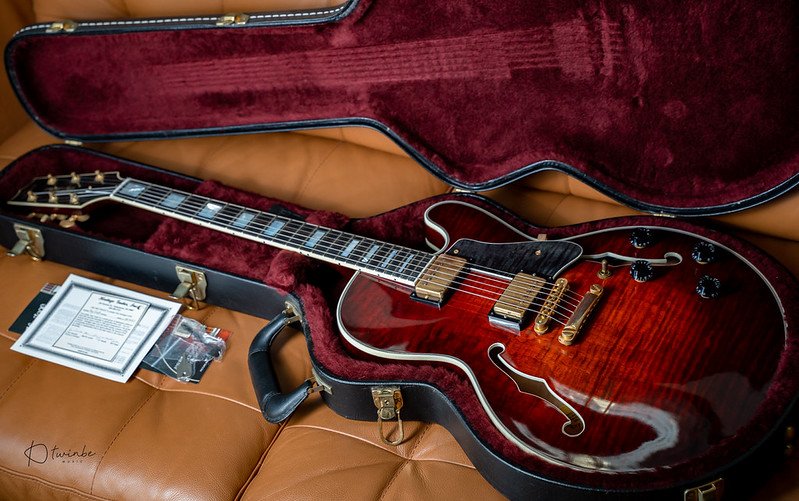
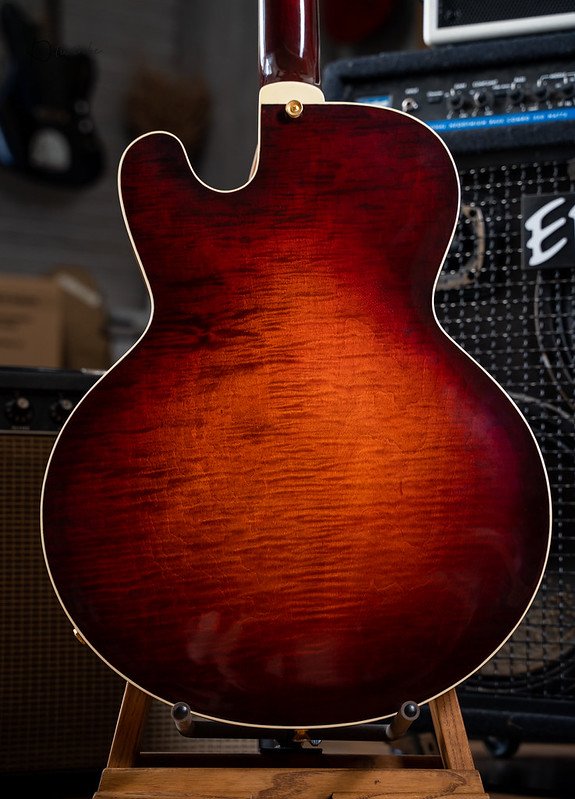
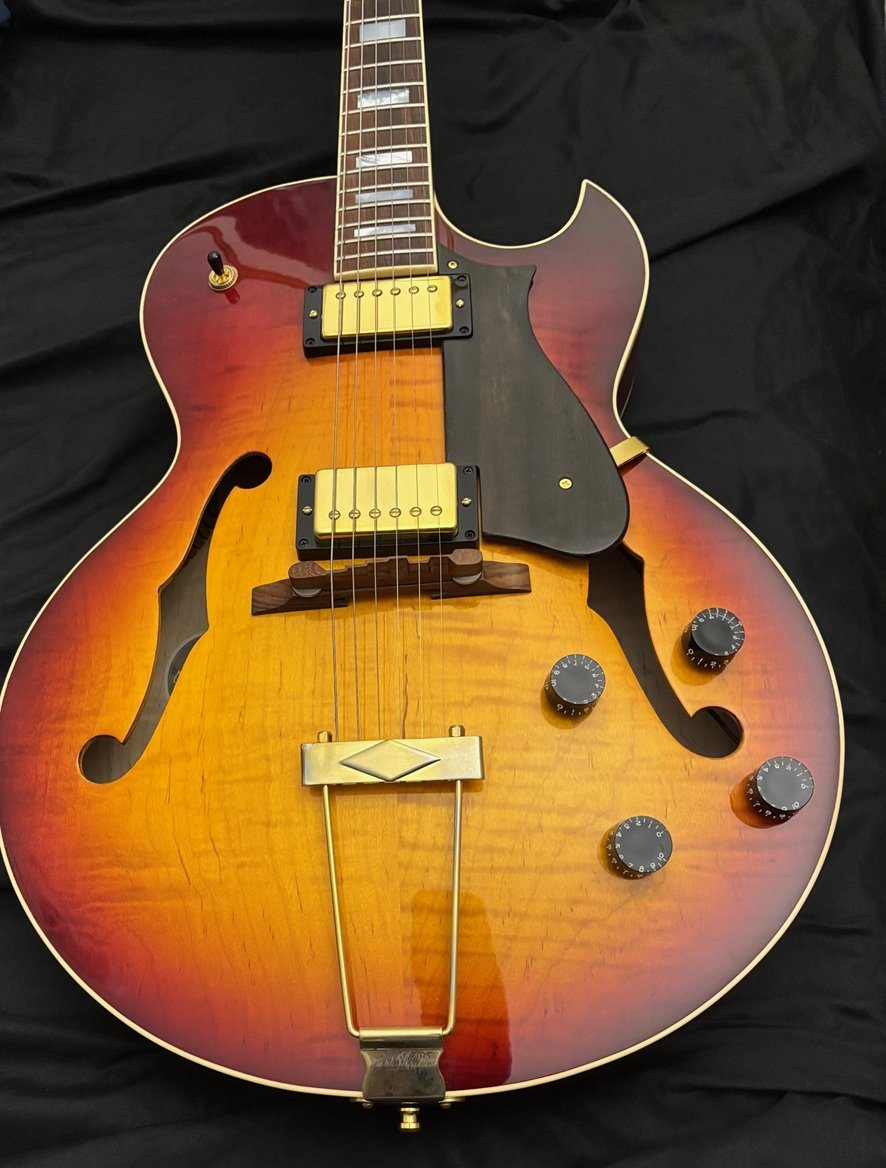
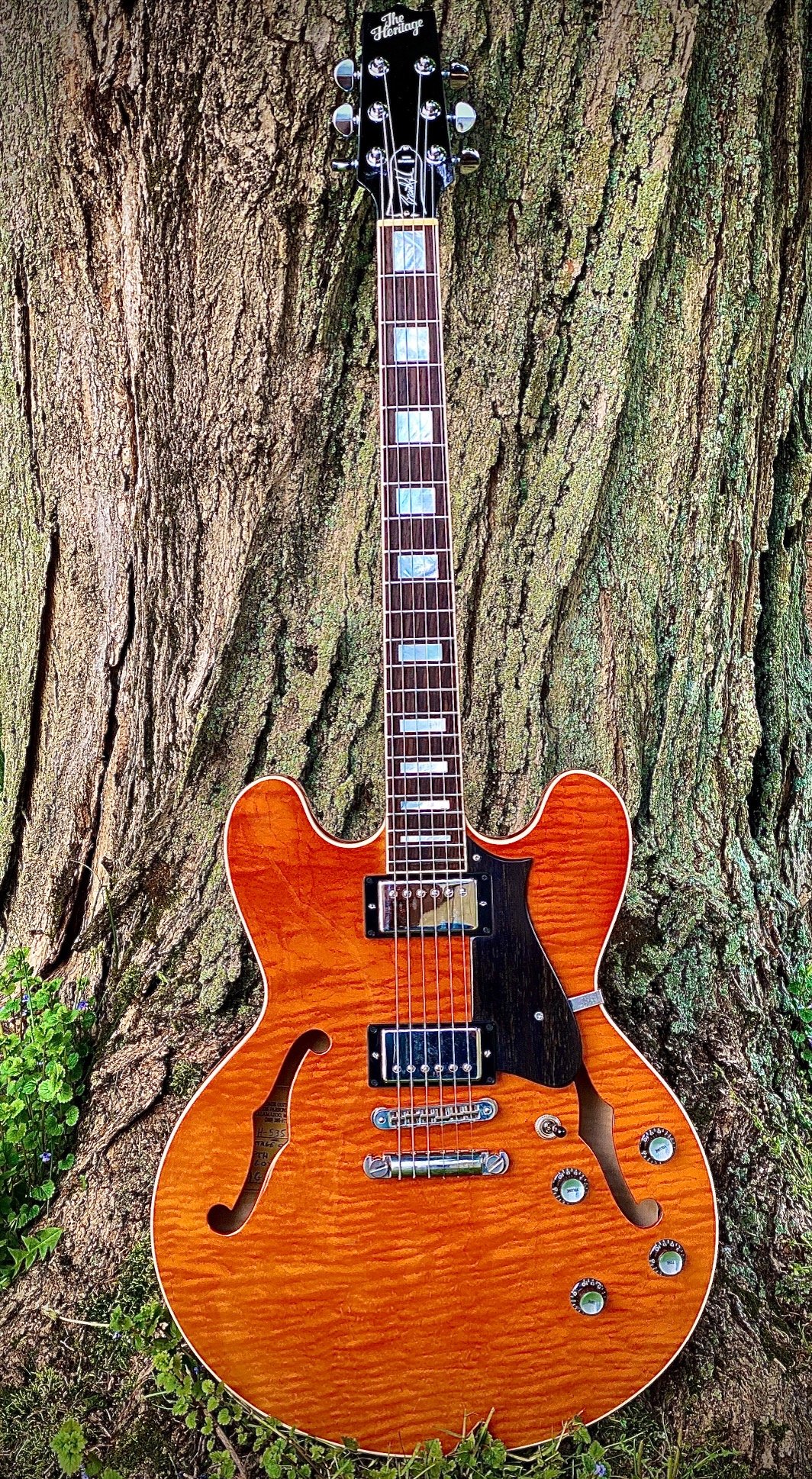
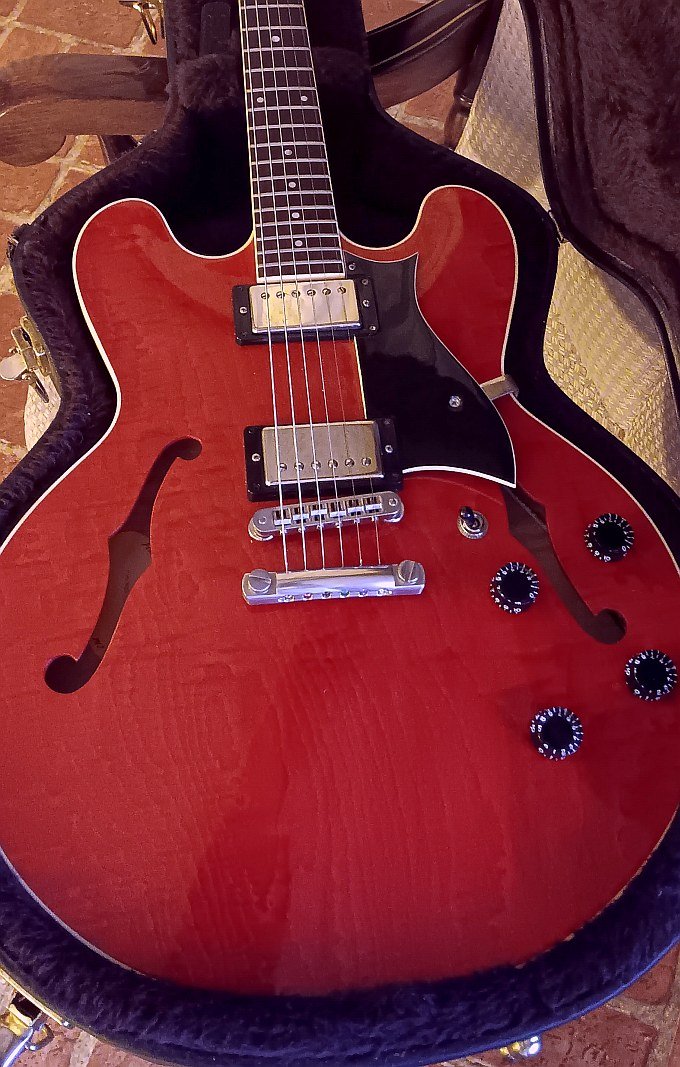
I know, this is a silly, maybe even sophomoric topic. But, that said, this is the Heritage Owners Club, right?! 🙂 And haven't we all thought about all of the many Heritage gitfiddles we've owned, played or lusted after? You know, that uber-flame-top H-(whatever) model that you never should have let go. Or maybe that sweet axe that you've worn down the frets on, and rubbed the finish off, due to its irresistible tone and feel? It doesn't matter if your favorite is an Ascent, Standard, Custom Shop, Core, Artisan-aged, Custom one-off, or an old school from the early days of Heritage. Bring it! And share a photo if you have one. No model is off limits as long as it is a Heritage Guitar. I'll kick things off with my all time favorite model...it's the no longer in production H525. I've been blessed to own two of these great instruments, but my all time favorite is the one-off custom that Marv built to my specs back when they built almost anything customers or dealers asked for. Here's a photo of Marv just after spraying it, taken by our dear friend, Ron (High Flying Bird) Warren. OK, YOUR TURN!! LET'S SEE YOUR FAVORITE HERITAGE!!1 point
-
Gorgeous guitar!1 point
-
That blue one is identical to my DC from Wolfe, except mine is trans cherry1 point
-
Good video, thanks C, but in the second part, what is surprising to me is the guy, Ry Charters, who owns Kal-Tone, never worked for Heritage. Hard to imagine a teenager growing up in Kalamazoo who loved guitars and aspired to repair and build them NOT wanting to work for Heritage.1 point
-
Hey, look who popped on! Glad to see you're still around.1 point
-
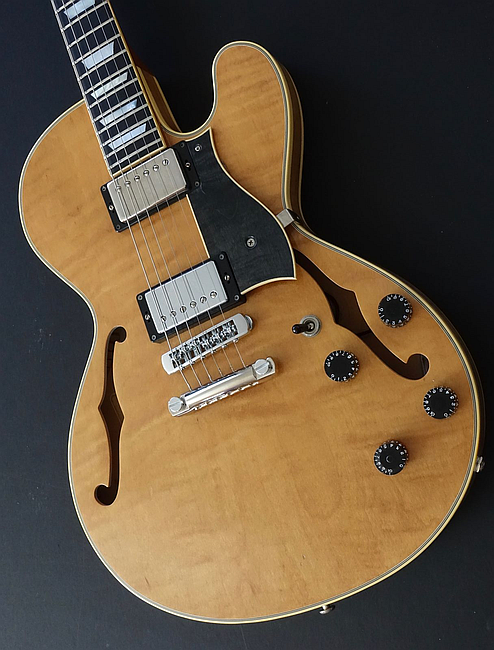
Good to hear! I actually just played a beautiful used Heritage Custom Shop Artisan Aged H-530 at a local shop near me: H-530 Antique Natural It's a real stunner but out of my price range. I definitely don't have any qualms about going for a standard. I have no doubt they are fine instruments!1 point
-
I remember you! welcome back.1 point
-
I've had two Roy Clark models. The first one was fully hollow and a thinline. That was a one-off. I have a standard model now which is just fabulous. It's gorgeous and plays very, very nicely. It's basically a 555 single cutaway. The cutaway is deep.
1 point
-
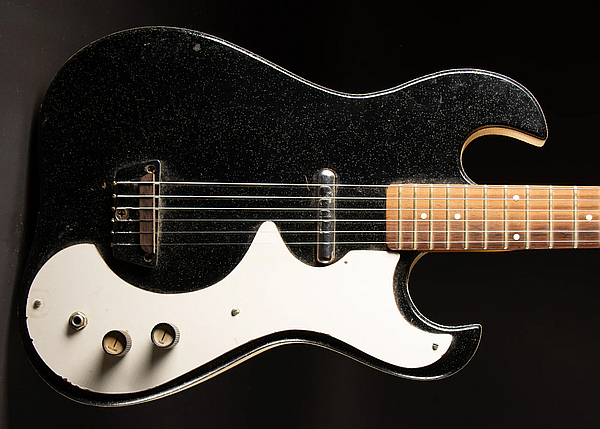
There's nothing like 1/4"+ action to build the strength in those 12 yr old fingers! (hey what's that adjustment thing at the base of the neck???? Could it have been a truss rod But look at all them PICKUPS! And it was a better guitar than the first one, made from the finest pressed paper tonewood. (masonite) I think I would take an Ascent H137 instead!
1 point
-
My dad, a failed guitar player, had a cheap Kent acoustic guitar that I learned my first few chords on, eventually the neck popped off of it from me tuning higher than it should have been Well then for christmas that year, my mom told my dad to buy me a guitar and amp. I got a Teisco Checkmate guitar with a matching little amplifier (in a plastic case). That was equally as bad as the Kent acoustic. The action on that guitar was so high I risked damage to my fingers everytime I tried to play a chord on it. After that, I took matters into my own hands. I saved up all the money that I could from my caddy job at the local golf course, and bought my first real guitar, a 1959 Fender Musicmaster in Desert Sand, and a Danelectro Cadet amp. I was off and running from there. But even in the early 70's, that little guitar and amp cost me $400. For nostalgia's sake, a few years back, I bought a 1960 Musicmaster that is pretty much identical to my old '59, and the same DanElectro Cadet amp just to see if I could make music with it, and here's a song I recorded with it. The Danelectro amp is a toy, but the Musicmaster is really a great sounding guitar, here it is through a proper amp, my Victoria Regal II...1 point
-
I had a Kent when I was a kid. They sucked.1 point
-
I see these in a different light. The guitar seems decent by this review. The price point is attractive to the begining and intermediate player due to the price. Those who can pay more and want "better", there are other places to go. I don't own anything in this series but have played a couple. I also recall one of my favorite rock players, Randy California of Spirit, played a Sears Silvertone in his early recording and performing days to great reviews. I have modded my H-150/157s over the years in some cases. The didn't "need" mods, but some fret work and slot cutting helped. If I were back in 6th grade, there's no way I could afford a new American built H-150 or H-535 from my paper route. If the Ascent+ was available, that may be within reach. I have an emotional bias though. I grew up in Kalamazoo. I'd take the temperature of the community since they are my audience. I don't think there would be resentment if I got the Asian version, especially as a kid. I can tell you that in Kalamazoo years ago, a lot of guys played Fenders and Gretsches. They never got any pushback for disloyalty. Rather, my friends liked trying them out. Quite a few were loyal Fender players. Some worked for Gibson. Brand loyalty has advantages. And if QC is solid, one advantage is you pretty much know what you're going to get before you open the case. If the Ascent series does have the quality and tight specs, those are strong positives. I don't own one, but I'm not allergic to them! A major reason I had a good early experience, 6th-10th grade, was a glut of Gibsons in my city. I got a Firebird V with a Kalamazoo amp from a neighbor for 6 weeks of paper route money. If I were not in Kalamazoo at the time, I'd probably would have had to go Asian! Let me mention that the Ascent line is still owned and managed by the Heritage company owners. If they can produce very good guitars with a significantly lower price in Asia, they likely have to strongly consider doing that for their investors. It is likely mandated. But it's our choice as to what we buy, and we buy for different reasons. My choice has been to buy locally. That's easy when the product is good and it supports your neighbors. If I were 13 again and had to earn the money for a guitar, amp and lessons, and a used Gibson or Heritage would cost more than a new Ascent, the lofty ideals of "buying American" may not be reachable. Lastly, the Ascent series idea came from somewhere. It may be what allowed the new Heritage owners the ability to maintain the original Kalamazoo site for the Heritage models. IDK. Recall that whatever the original Heritage factory owners were doing was not survivable, leading to its sale. Projecting from my youth when I'd stare at the Gibson catalogs, quite a few kids who get an Ascent will move up into a Heritage or Gibson or Fender or PRS. From what I see, the Ascent seems like it could work as an entry point for a kid into a lifetime of guitar.1 point
-
Try to rotate them all but, this one the most. H-575 Custom with Seth's
1 point
-
Multiple favorites for different reasons, but here’s one (if i have to pick just one):
1 point
-
What do they say? Love the one your with! Lately I've been playing this beauty, the one Kuz sold me! Marv put his special sauce into this paint job! And I had Dan at Mojo Axe make me cool looking vintage style pickguard so I can plant my pinky while I fingerpick on it! A few weeks ago. I pulled this one of the case and it was buzzing on the 3rd fret G note of the low E string. Well I noticed the strings hadn't been changed since I bought it from Kuz. How do I know that? They were D'Addarios, and I never use them. So I polished the frets, put my favorite Pyramid nickel roundcore strings on it, gave the truss rod a turn, and voila, it snapped right into shape! As I was testing the new setup I was making up licks with that G note and came up with a new song for the band, here's the demo...
1 point
-
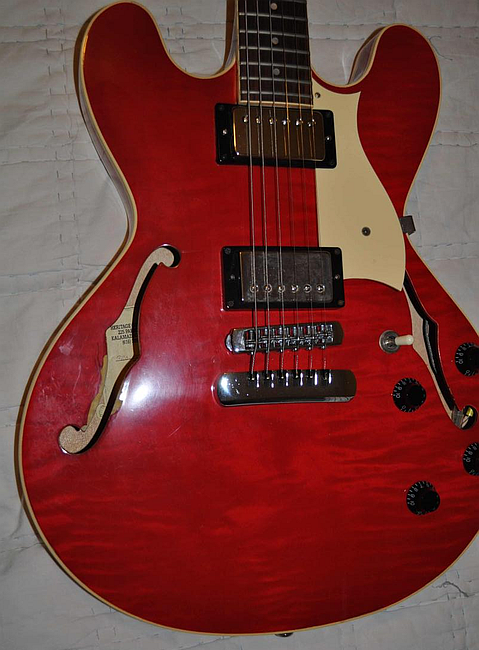
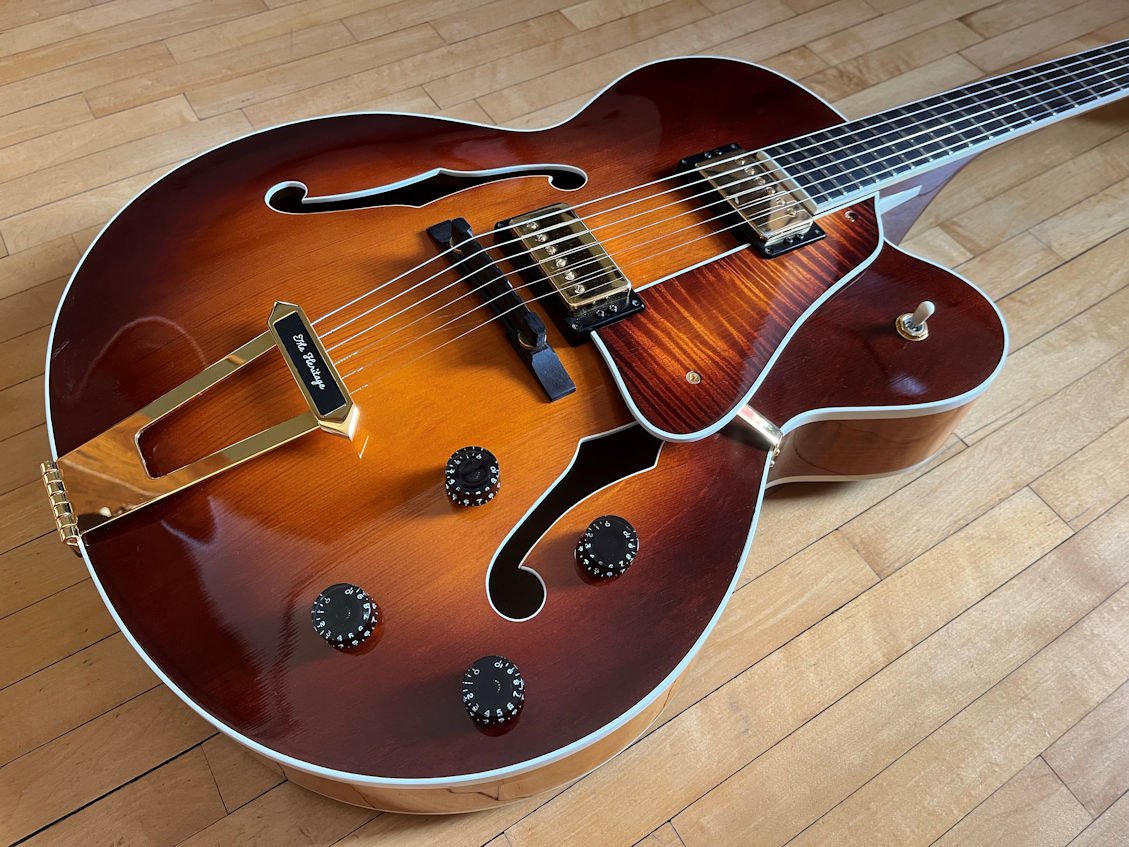
Favorite, that's a tough one. I would have to narrow it down to two, the 535 and the Millennium 2000. If I had to pick just one, it would probably be the 535. The red semihollow was my first "guitar lust". When I was taking lessons at Dee Wells as an 11 yr old, I would see that red 335 (or 345, or 355.. I didn't know the difference) in the display case, and I wanted one! It was the second Heritage that I bought, found it used on Ebay years ago. I still love that style of guitar 60 years later. I've had lots of different guitars, but I still favor them!
1 point
-
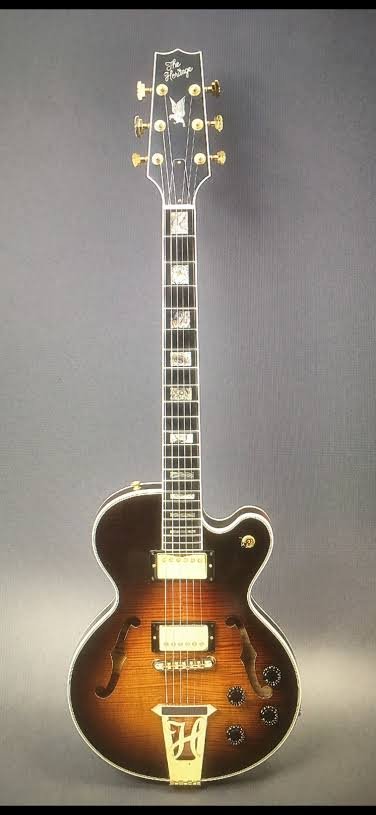
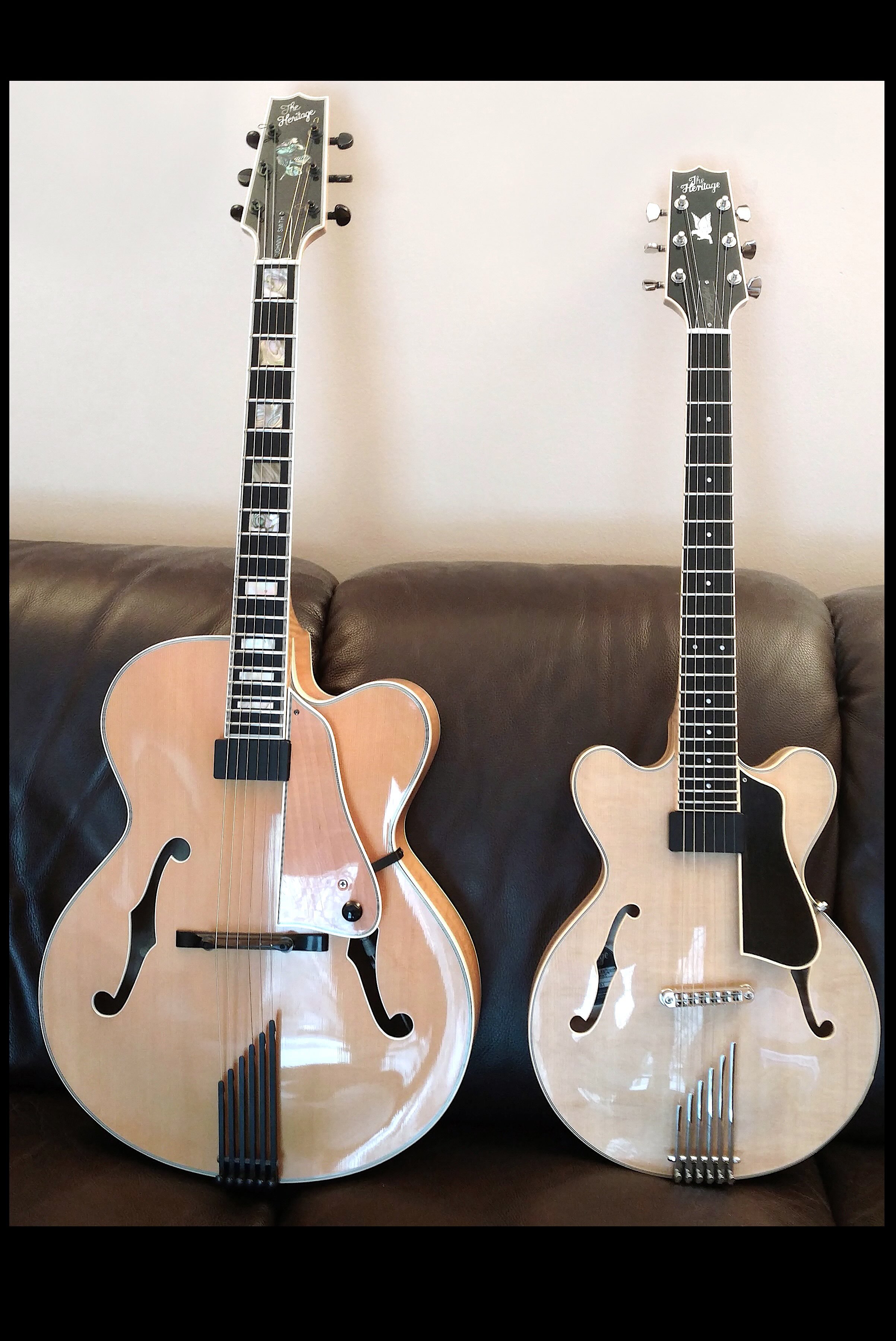
These are my favorites, A Heritage Johnny Smith and its Mini-Me The Heritage Millennium SuperLight.
1 point
-
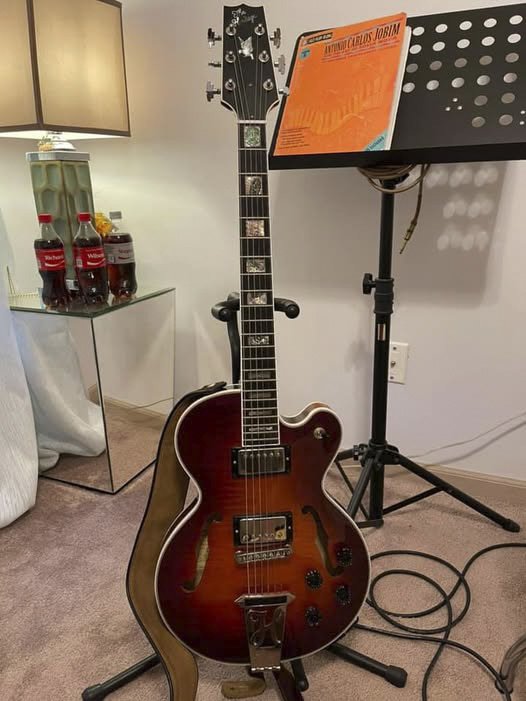
I currently own five Heritage guitars and recently sold my old 1992 H-535. Of all of them, though, I'd have to say that my all-time favorite is the Eagle Classic that I bought new from Jay Wolfe in 1996. At the time I just wanted to purchase a quality jazz box that would carry me well into my senior years. This one gets the least amount of play time than any of the others, but while I consider my others to be tools of the trade, I think of this one as being more like a collectible piece of art that also reflects the beautiful craftsmanship of electric hollow-body guitar building. It's just one of those guitars that will always remain with me.
1 point
-
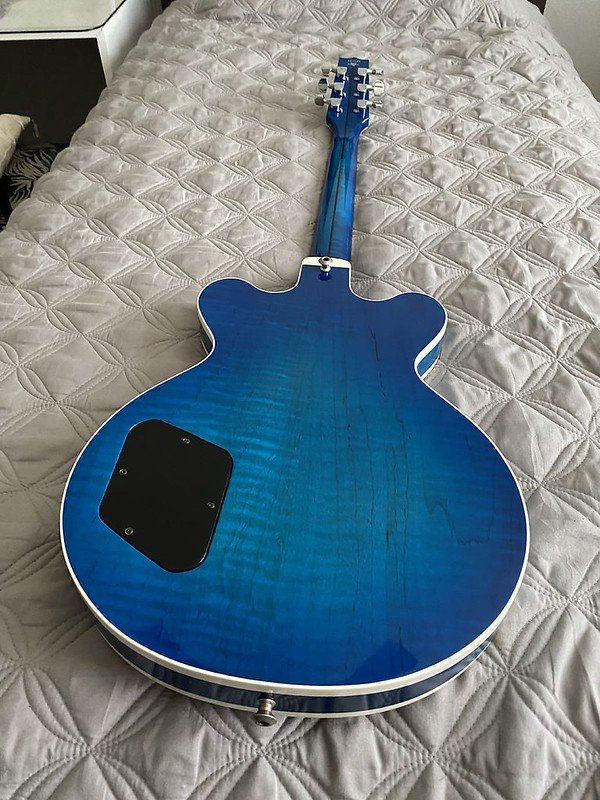
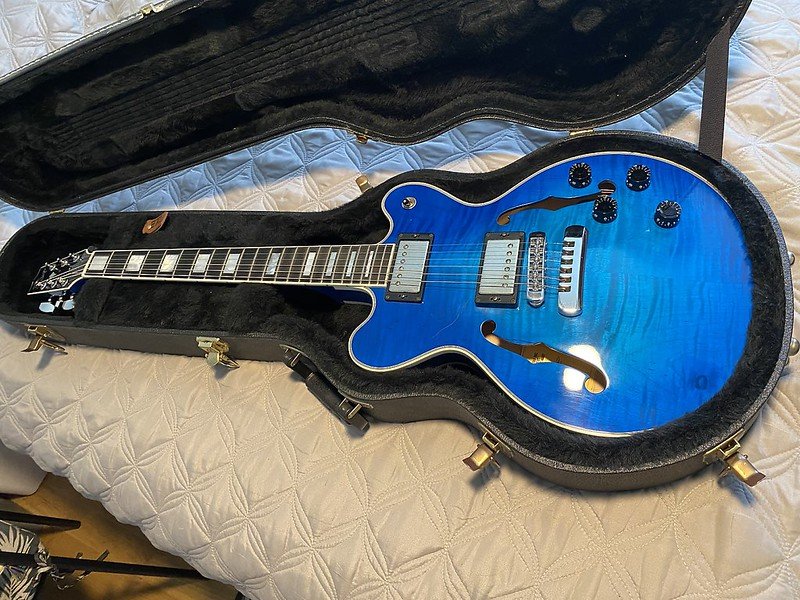
Actually, it was about a week ago at PSP. The display room was filled with temptations and i succumbed. I've been thinking about a 530 for about a year but I hear first with my eyes, which so far has about a 90% success rate. I just didn't see one that I was willing to pull the trigger on. I was afraid if I tried one in a color I wasn't thrilled with, I would love the way it plays and wind up with a player not a stunner. I think I have bases covered on this one! I heard this one from across the room, and it was everything I was wanting. The neck is perfect for me as was the factory setup. Mike at Heritage told me this is one of two, River Blue, they did last year. The other one went to France. Anyway, I brought it home and am loving it. One other superficial feature I love on this one is the headstock inlay is white/ pearl and not amber. I can't wait to get home from this current work trip and do some more bonding.
1 point

.jpg.7aa04244010591acb5be1080faa6b3c4.jpg)









.jpg.631754b5f3fed42e2bc3f06332ae5da5.jpg)
.jpg.e817c72814dbd031df5885647fc03e7a.jpg)
.jpg.ec3ec89f628a67bbd12d51ce6d433b8a.jpg)