DetroitBlues
-
Posts
3666 -
Joined
-
Last visited
-
Days Won
60
Recent Profile Visitors
56255 profile views






DetroitBlues's Achievements






-

Heritage Guitars Ascent+ (Import series) Deep Dive
DetroitBlues replied to HANGAR18's topic in Heritage Guitars
First guitar I learned to play was my step-dad's old Kent,
-
Old Heritage H150 - perfect Les Paul.
DetroitBlues replied to les paulverizer's topic in Heritage Guitars
Sweet guitar and a killer setup. I have a DSL40C I used for a few years now, but I have since started using a Kendrick 5E3 Tweed Deluxe amp. I'm really surprised how great it sounds using both single coil Fenders and of course my Heritages. No tube screamer for me, I like the Timmy a bit better. Bad Monkey if I want to kick in some saturation. The Fender Champion II seems like an interesting amp, I was considering one of them when I finally found a Peavey Bandit Redstripe (I found that amp crunch channels sound nearly the same as a DSL40.) -
Bit of a tone report, used the Kendrick at a gig a couple weeks ago. Just running my typical pedal board, modulation and all, to the front of the amp and it was awesome. It fit in the mix just right and cleaned up perfectly with the volume on the guitar rolled back. My sole overdrive was just a Timmy V3. So much fun with a small combo.
-
Behringer was immediately sued for making near exact clones to include logo and naming. Zero shame in their game. They've done the same for high gain amps too if memory services. There are a lot of demo's and videos out there. It even when so far as stating the Digitech Bad Monkey was suitable as a Klon-like pedal. The prices skyrocketed on those pedals for a hot minute.. Debating selling mine for that very reason. Paid probably $25 for it years ago and they were selling for close to $200 used because of a video Josh Scott from JHS made comparing his actual Klon to the Bad Monkey.
-
Who here does any amp channel swtching via MIDI?
DetroitBlues replied to mars_hall's topic in Amplification and Effects
You lost me at Midi...I just plug a guitar cable into an amp. -
That's interesting. I was rather surprised to see after years and years, manufactures still employ a string to turn the volume pot instead of a treadle like a Wah pedal....
-
Excellent choices to have as keepers. Many on here, myself included, have owned and parted with several Heritages we regret selling/trading off. It happens. But you still have some excellent tools in the shed now, so it all works out in the end.
-
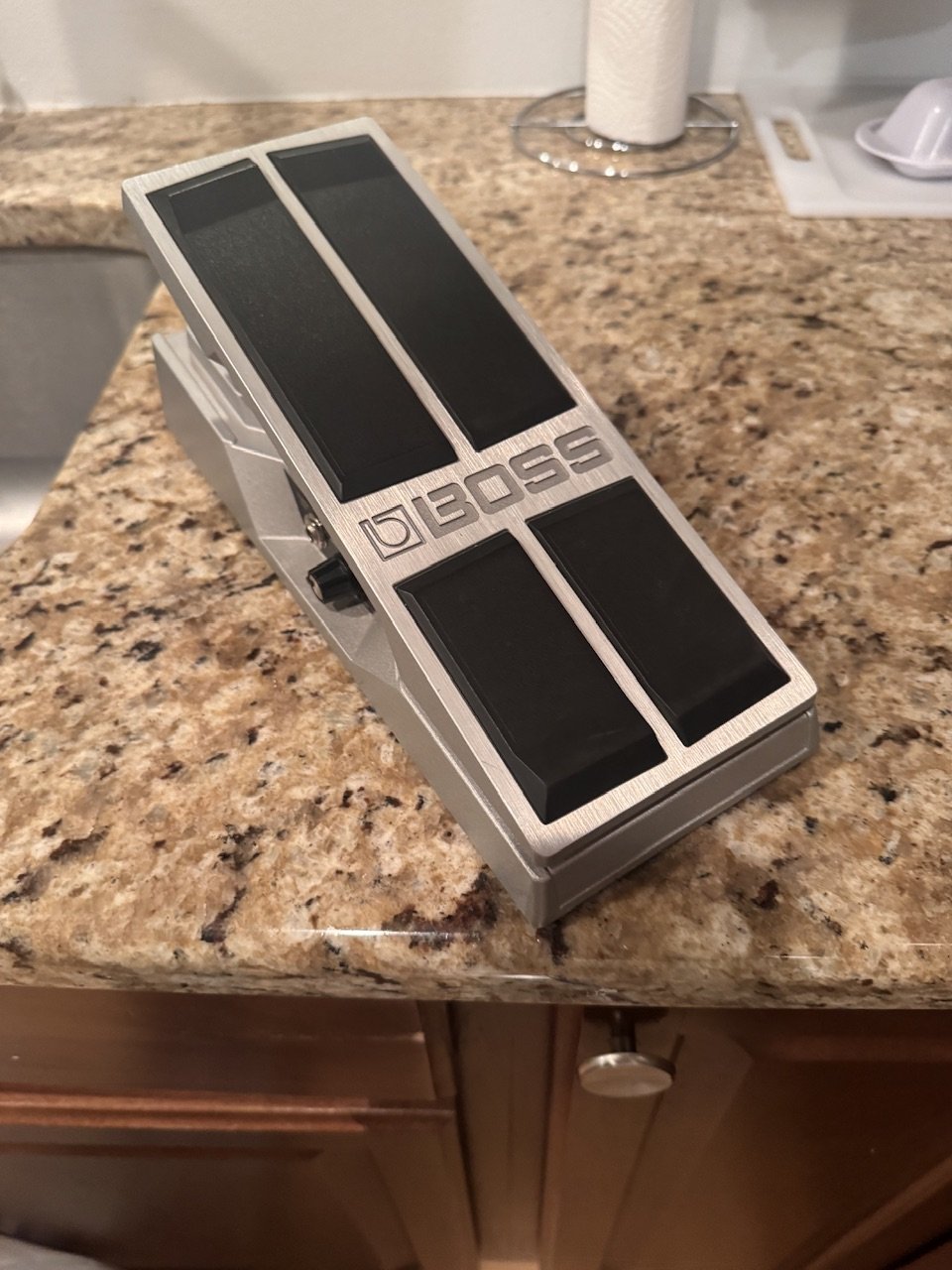
I was going to add a volume pedal to my board... The interwebs recommended to find a used Boss FV-500H. So I bought a used one.... However, this beast of a pedal is about 20% bigger than a standard WAH pedal... Not sure what Boss was thinking making such an oversized pedal... Not sure who they think is supposed to be using this.... wowzers.
-
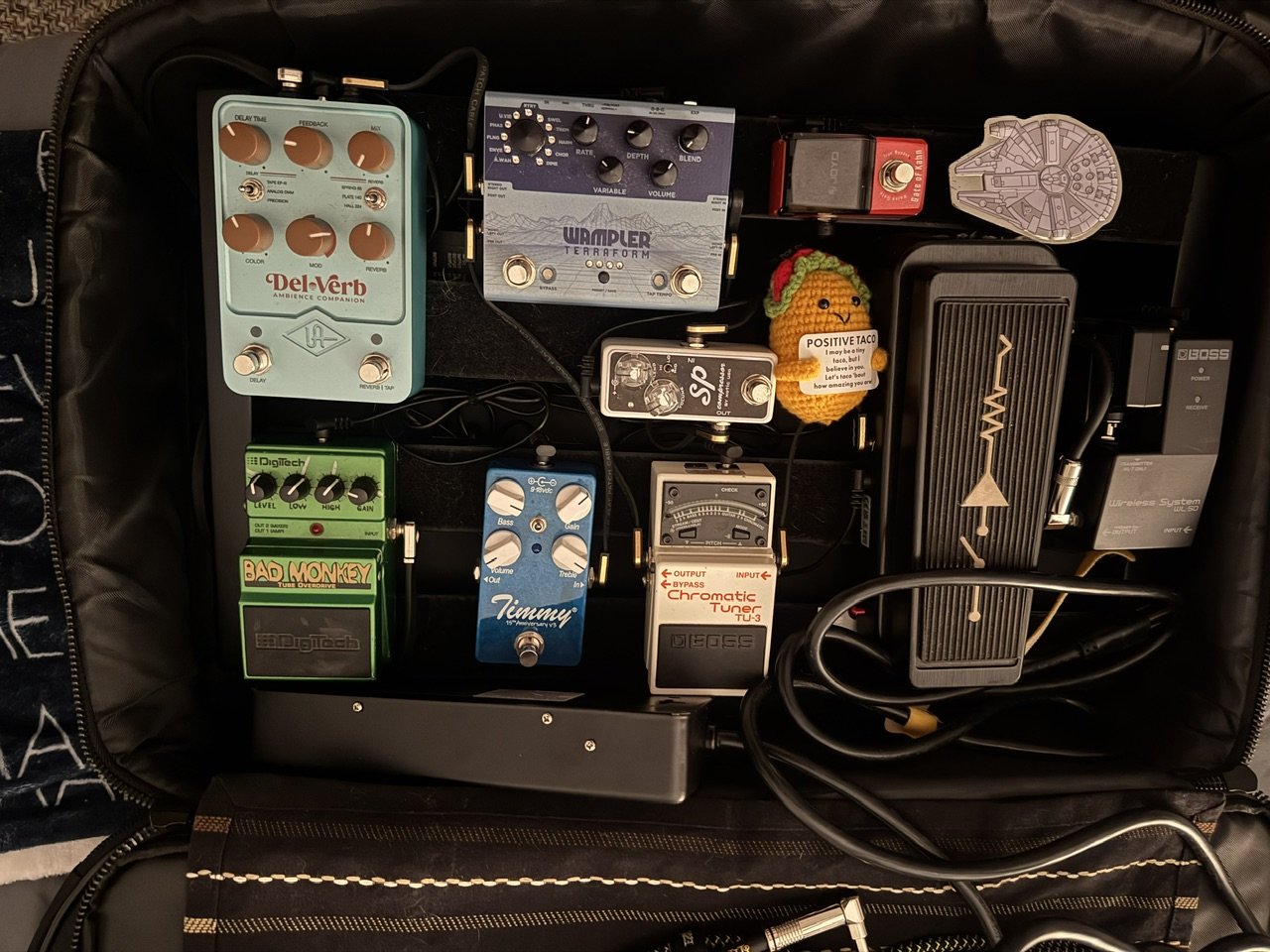
In the midst of going back and revising the board for a simple method of running everything to the front of the amp and forgo the effects loop. At the same time, I am also adding in a volume pedal as it is something I've been wanting to add and with a possibility of a being in a tribute band that covers Stevie Nicks Fleetwood Mac music. Lots of ambient guitar parts Lindsey Buckingham plays that calls for some additional effects.
-
Your Favorite Heritage Guitar is...??
DetroitBlues replied to Gitfiddler's topic in Heritage Guitars
Plan for next year is to give back to all those who have helped me through dark times so I can retain what I have but make whole of what I possess. -
Heritage Guitars Ascent+ (Import series) Deep Dive
DetroitBlues replied to HANGAR18's topic in Heritage Guitars
Rather surprised on the neck carve. That is a step up to an Epiphone alone. Electronics seem a bit on the budget side, but I’m sure they are fine. -
The Peavey Bandit - Redstripe
DetroitBlues replied to DetroitBlues's topic in Amplification and Effects
This Peavey was my second Peavey Bandit Redstripe (first one was ten plus years ago with a faulty reverb). This one was much more pristine and sounds great. Back then I compared the amp to my new DSL40C with a Celestion Creamback. I found the overdrive on the 2 amps sounded nearly identical. I parted with both of those amps (really shouldn't have amongst the dozens of other great gear I let go). A friend of mine sent me his DSL40C a couple years ago (which I still have) and gigged with it for a long time. I had to get rid of most of my gear since my divorce so it was my one remaining amp. Most recently, I did buy a used Peavey Restripe Envoy 110 (baby-brother to the Bandit). Its a very usable amp, sounds pretty close to the bandit without as many features. The FB pages debate on the use of different speakers to improve any of these amps, but for the most part people keep them as-is. I'm good with that myself. -
I tried one of those Boss units for a hot minute and found it too confusing to run the way I wanted it to.
-
While I have a pair of Timmy's, I only use one at the moment. I use my Digitech Bad Monkey as my solo boost through an effects loop, only works on my Peavey, it doesn't work on my Marshall. I will try it out on my Kendrick this weekend. Here's the flow: Front of Amp: Boss WL-60 > Dunlop Wah > Boss TU-3 > Xotic Compressor > Wampler Terraform (pre-effects loop side) > Timmy v3 > Amp Input Effects Loop: Joyo Gate of Khan (Noise Suppressor) > Wampler Terraform (effects loop) > UA Del-Verb > Digitech Bad Monkey
-
Congratulations! Sellers need to know their gear. If they don't and has some "no return" policy, that definitely raises some red flags. You'll pay a bit more for new, but you'll have some piece of mind now.